
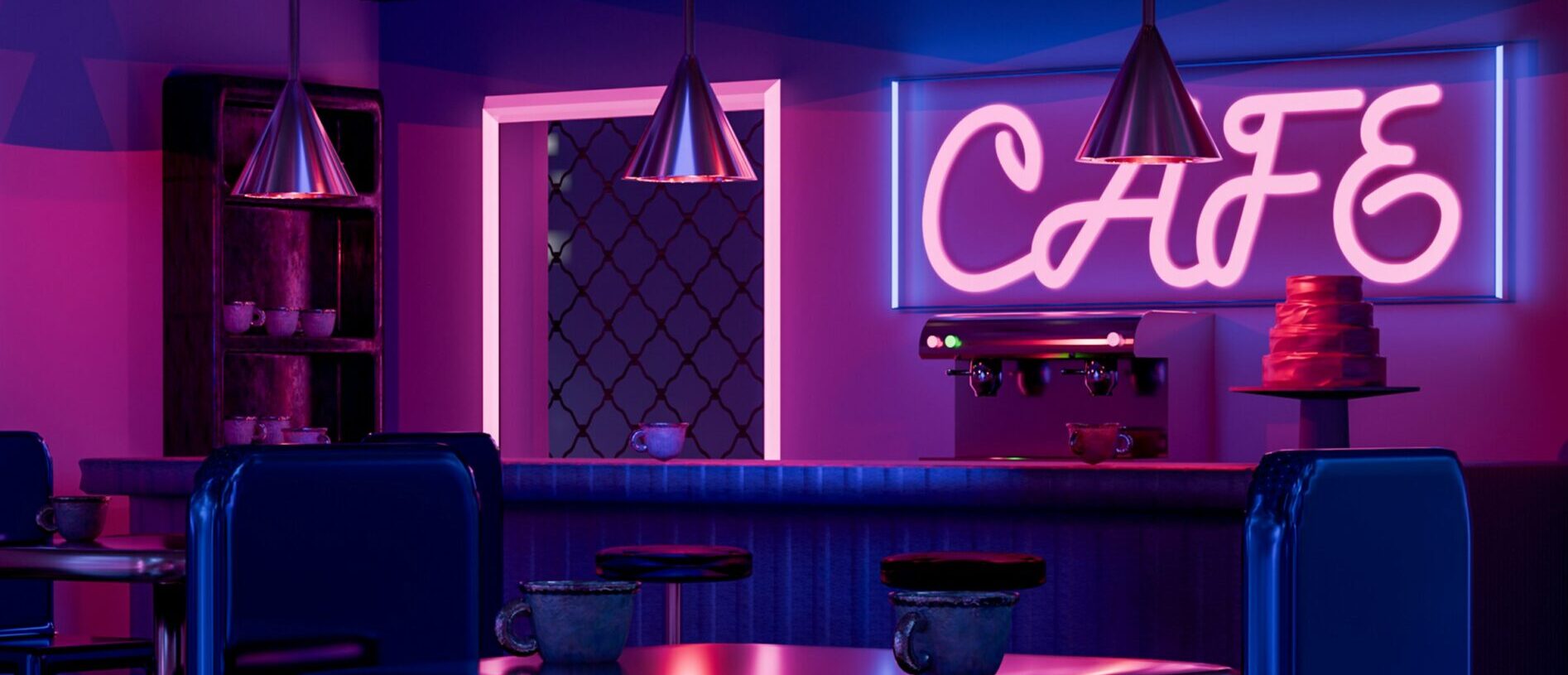
Why immersive cafés are becoming the ultimate social and creative spaces.
Traditional cafés were built for conversation.
Cyber cafés are built for connection, creativity, and immersion.
A new generation of spaces is emerging around the world — blending coffee culture with gaming, remote work, digital art, music, and futuristic design.
Why People Want More Than Coffee
Modern customers don’t just buy products anymore.
They look for:
- experiences
- atmosphere
- identity
- community
Cyber cafés combine all four into one environment.
They become workspaces by day, social hubs by night and creative studios after midnight.
The Influence of Gaming and Streaming Culture
Gaming culture changed how people socialize.
Today’s generation grew up:
online
connected
visually immersed
Neon aesthetics, RGB lighting, synth music, and futuristic interiors feel familiar because they reflect digital culture itself.
Cyber cafés are physical extensions of online worlds.
Remote Work Changed Everything
Freelancers and remote workers no longer want sterile offices.
They want:
- inspiring spaces
- strong internet
- flexible hours
- creative energy
That’s why many cyber cafés stay open late and prioritize comfort, atmosphere, and technology.
A Space for Creators
Artists, coders, musicians, editors, and designers often work unconventional hours.
Cyber cafés provide ambient inspiration and social energy without pressure. It’s also a great place to collaborate or to disappear into focused work.
For many creators, these spaces feel more natural than offices.
The Future of Café Culture
The next generation of cafés will blend:
- technology
- entertainment
- design
- food culture
- digital identity
Some already include:
- gaming zones
- VR rooms
- creator studios
- AI-powered experiences
The line between café, studio, and social space is disappearing.
Final Thoughts
Cyber cafés represent more than a design trend.
They reflect how modern people live, work, create, and connect.
The future café isn’t just a place to drink coffee.
It’s a portal into a different world.